Mold Removal in Cedar Lake, MS
Cedar Lake is the North Biloxi neighborhood around the Cedar Lake Road exit off I-10 — the medical corridor, the shopping along the road, and the subdivisions that spread out behind them toward the Back Bay and the Tchoutacabouffa. Most of the housing went up from the 1980s through the 2000s: slab houses with attic ducts and hall-closet air handlers, on lots that were pine woods a generation ago. It sits high enough that the 2005 surge stopped short of most streets; the wind and weeks of rain didn’t.
Mold in Cedar Lake? Call and describe what you see or smell and what got wet. If we’re on a job, you’ll get a scheduled callback from a number you’ll recognize.
Mold in Cedar Lake
The calls here are the ordinary Gulf Coast kind: a ceiling stain under a duct sweating in the attic, a bathroom that never dries, a water heater in a closet that let go over a weekend. A dark patch that came back after a coat of paint is black mold removal or plain mold removal — the color doesn’t change the job.
Found Mold In Cedar Lake? Call Us
Say where it is, what got wet, and when it started. We remove mold; we don’t test or assess.
Call and tell us what you found.
Services Available in Cedar Lake
Attic Mold Remediation
A gray streak on the roof deck after a lifted shingle, matted insulation under a ceiling stain, or a bath fan blowing steam into a Biloxi attic that never cools off. Cleaned in place with the hatch sealed off from the rooms below.
Bathroom Mold Removal
The spot on the ceiling above the tub that comes back after every scrub, a soft wall behind the toilet, a vanity floor that stays damp. Small rooms with no dry season, and removal that holds once the moisture is dealt with.
HVAC and Duct Mold Remediation
The air runs most of the year here, and a musty blast when it starts is the tell. Growth at the coil, in the plenum, or in sweating flex duct through the attic — cleaned or replaced so the system stops carrying it room to room.
Crawl Space Mold Remediation
Older raised houses along the Back Bay and everything lifted onto piers after 2005 have a damp space underneath. Joists and subfloor cleaned, wet insulation out, and a plain answer on what has to change for it to stay dry.
Mold Odor Removal
That musty smell has a source. One closet, one bedroom, or the whole house every time the air kicks on — we find the wet material behind the smell and take it out instead of covering it up.
Mold Removal
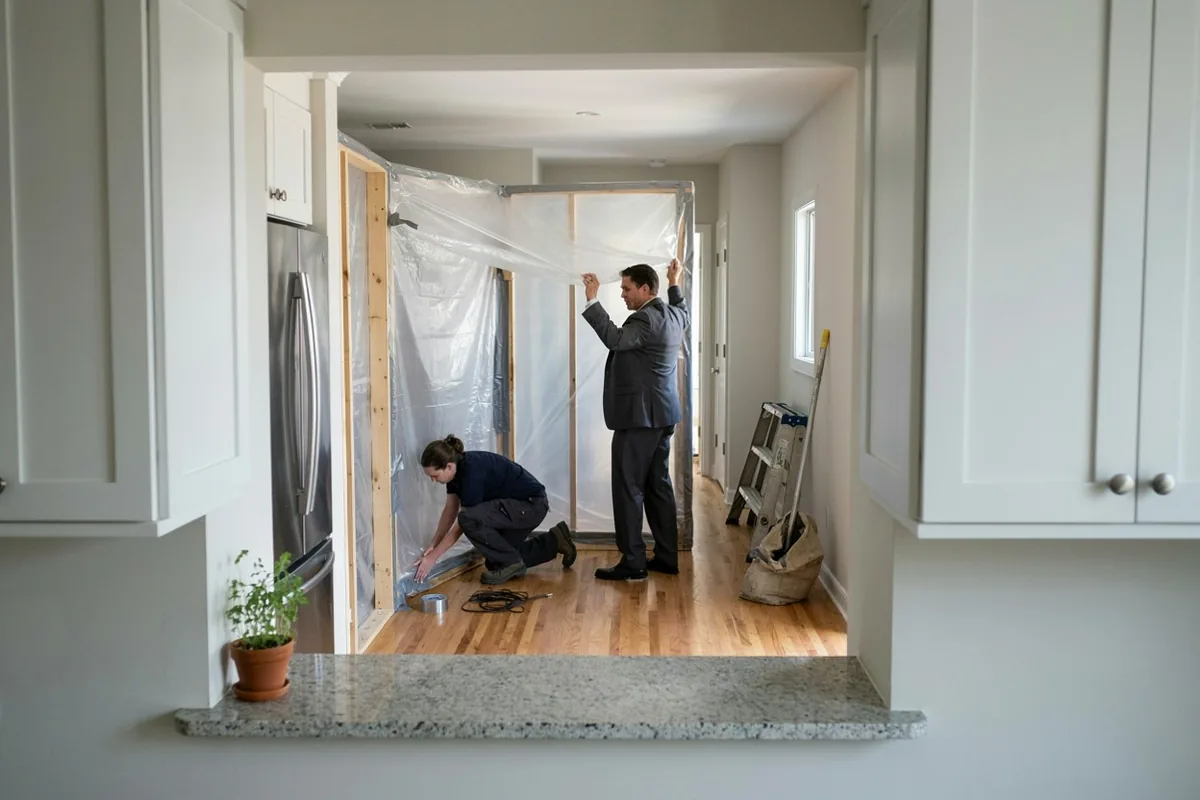
Sealed work area under negative pressure, the wet drywall, trim, and insulation out of the house, and the framing cleaned and dried before anything closes back up. Then a written report of what came out and why.
Black Mold Removal
A dark patch spreading on a ceiling, a baseboard, or the back of a closet gets the same removal as every other color. CDC says the type doesn’t change the job — the moisture that fed it is what we chase.
Whole-Home Mold Remediation
A water line on every wall, a roof that leaked through a whole summer, or a house that sat closed and damp after a storm. Room-by-room containment and removal on one plan, with one report at the end.