Attic Mold Remediation in Biloxi, MS
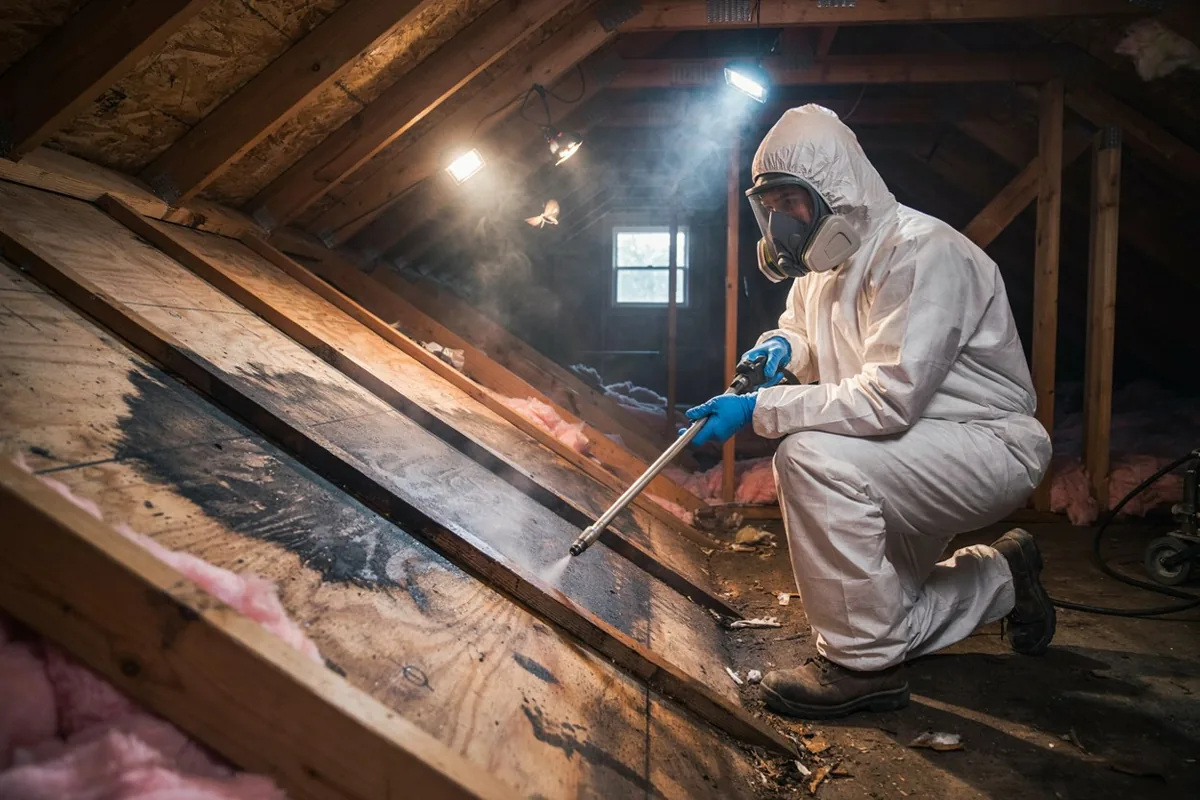
You went up to pull down the hurricane shutters and the underside of the decking is streaked gray along one rafter bay. Or the stain on the hallway ceiling finally made you push the hatch open, and the insulation under it is flat and dark. Biloxi attics take the roof damage from every storm and then bake between them, holding humid air against wood all summer. Call and tell us what you saw up there. We handle attic mold in Biloxi, D’Iberville, and the eastern Mississippi Gulf Coast.
Where attic mold comes from
Roof leaks first — a shingle lifted by Zeta, a nail pop, flashing around a vent stack that stopped sealing, a tarp that sat too long. A bathroom or dryer fan that dumps into the attic instead of through the roof, pushing warm wet air onto the decking every morning. An air handler or a flex duct sweating through a Gulf Coast summer onto the insulation below it. A ridge vent or soffit covered during a re-roof so the attic can’t breathe. Each of those puts water on wood, and wood has EPA’s 24-to-48-hour window like everything else.

The stain on the ceiling is the small part
- Roof leak? The clock already started — the day the rain got in, not the day the roof was patched.
- The roof stopped leaking, but the decking and insulation under the repair still hold what got wet while it was open.
- A wet weekend on the Gulf is all it takes for insulation to mat and growth to spread along the rafters.
- Waiting rarely makes removal easier; a wet ceiling becomes sagging drywall and a larger job.
Mold After A Roof Leak? Tell Us What Happened, 24/7
What the work looks like
We seal the hatch and any openings and put the attic under negative pressure, so the work doesn’t push spores down into the rooms below. Wet, moldy insulation comes out in bags. Roof deck and rafters stay put; they get cleaned where they are and HEPA-vacuumed. If the ceiling drywall under the stain has gone soft, that section comes out from below. No new insulation goes in until the wood reads dry, and we tell you what has to change — a vent, a flashing, a fan — so the cleaning holds.
Biloxi notes
Zeta in 2020 pulled shingles off roofs from Woolmarket to Point Cadet, and plenty of attics sat under blue tarps with rain finding the edges for weeks. The 1950s and 60s ranch houses in West Biloxi carry decades of roof patches, and the houses rebuilt fast after 2005 often have bath fans that were never run out through the roof. If the stain on the ceiling appeared after a storm and the roof has already been repaired, the attic is still where the answer is.